「国家100年の計」を掲げ、大東亜共栄圏を実施した先人たちの思いが、仮に本当に100年後の私たちを案じてのものであったとしても――私たちは(というか、私は)、とてつもない負債を背負わされた、という感情を正直に持っています。
「三国志外伝 愛と悲しみのスパイ -風起隴西-」の最終話を見終えました。
I have just finished watching the final episode of *“The Wind Blows from Longxi: A Side Story of the Three Kingdoms – Love and Tragedy of Spies.”*
面白かった。
It was interesting.
私、“ドラマ”と名の付くものは、ほとんど見ないのですが、「三国志」と付いていたので、第2話から録画をし始めました。
I rarely watch anything labeled as a “drama,” but since this one had “Three Kingdoms” in the title, I started recording it from episode two.
ところが、これが
However, this turned out to be—
―― 訳が分からん
—completely incomprehensible.
のです。第1話をスキップしたのが致命的だったのか、あるいは、私の人物把握能力が劣っているのか(多分、後者)、とにかくチンプンカンプンでした。
Whether skipping the first episode was fatal, or whether my ability to keep track of characters is simply poor (probably the latter), I was totally lost.
こういう場合、私は普通、視聴を止めるのですが、自分でも理由が分からないまま、なぜかダラダラと見続けてしまい、最終話近くになって、ようやく人物と国の関係が整理されてきました。
In situations like this, I would normally stop watching. But for reasons I still don’t quite understand, I kept watching lazily, and only near the final episodes did the relationships between the characters and the states finally start to make sense.
それでも、なお、私が思ったのは、
Even then, what I still thought was—
―― これ、三国志の経緯や地理関係を理解していないと、相当きついんじゃねーか?
—Isn’t this extremely hard to follow unless you already understand the historical background and geography of the Three Kingdoms?
---
私は、三国志マニアではありません。ただ、すでにお話した通り、Three Kingdoms 全95話を、5回ほど繰り返し見直しているので、三国の関係や主要登場人物については、概ね頭の中でロックされています。
I am not a Three Kingdoms fanatic. However, as I mentioned before, I have rewatched *Three Kingdoms* (all 95 episodes) about five times, so the relationships among the three states and the main characters are more or less ingrained in my mind.
もっとも、その「ロック」がかかっているがゆえに、別の物語で、別の役者が同じ歴史人物を演じていると、その人物間で「これは同一人物である」というリンクを、自分の頭の中で張り直さなければならない、という面倒な手続きが発生します。
However, precisely because that information is “locked,” when a different actor portrays the exact historical figure in a different story, I have to go through the troublesome mental process of re-establishing the link that says, “Yes, this is the same person.”
つまり、
In other words,
"ln -s ../the_three_kingdom/Zhuge_Liang the_wind_Blows_from_Longxi/Zhuge_Liang"
という感じですね。
That’s what it feels like.
ハードリンクではなく、**シンボリックリンク**とするところがミソです。同一実体として固定するのではなく、「参照関係」として結び直す、という意味です。
The key point is that it’s not a hard link, but a **symbolic link**. It does not fix them as the same entity, but reconnects them as a reference relationship.
---
このドラマでは、「漢の復興」というメッセージが何度も繰り返されますが、正直なところ、どうも中国史の登場人物たちは、歴史の勉強が足りないのではないか、と思ってしまいます。
In this drama, the message of “the restoration of Han” is repeated many times. Still, frankly, it makes me feel that the characters in Chinese history were somewhat lacking in historical self-awareness.
というのも、中国史において国家というものは、日本とは異なり、前の国家を完全に叩き潰し、その上に新しい国家を作り直す、いわばスクラップアンドビルド方式を採用してきた歴史だからです。
This is because, unlike Japan, Chinese history has largely followed a scrap-and-build approach, in which the previous state is destroyed, and a new one is built on its ruins.
一方、日本は、少なくとも「原則」としては、「統一王朝(天皇陛下)」を頂点に据えたまま政権が交代していく、という形を取り続けています。いわば、『世界最長のブロックチェーン』です。これは過去に技術系の記事で案出した考えで、天皇制の連続性をブロックチェーン構造になぞらえたものです。
Japan, on the other hand, has continued—at least in principle—to change governments while maintaining a unified dynasty centered on the Emperor. In a sense, it is the world’s longest blockchain. This metaphor has been pointed out before in technical articles, likening the continuity of the imperial system to a blockchain structure.
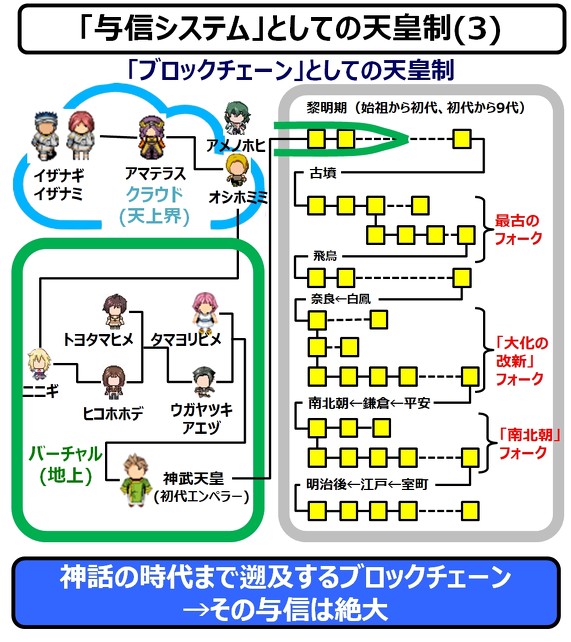
(↑ Jump to the column)
それでも漢王朝は約400年あまり続いたわけで、その意味では「そこそこがんばった方」だとは思いますし、魏によって滅ぼされた後も、蜀漢が正統を掲げて北伐したという歴史的背景を、私は全く否定するつもりはありません。
Even so, the Han dynasty lasted for a little over 400 years, which I would say counts as doing reasonably well, and I do not intend to deny the historical background in which Shu Han claimed legitimacy and carried out the Northern Expeditions after the fall of Han to Wei.
ただし、このドラマでは、その思想的バックボーンとして、諸葛亮(しょかつりょう) vs 李厳(りげん)という構図が横たわっています。そして、ここで私は、はっきりと「りげん派」なのです。
However, in this drama, the ideological backbone is presented as a Zhuge Liang vs. Li Yan structure. And here, I am clearly on Li Yan’s side.
「国家100年の計」という言葉は、私がこれまで生きてきた人生の中では、たいていの場合、「悪い方向に走る」ための免罪符として使われてきた、という印象しかありません。
The phrase “a hundred-year plan for the nation” has, in my life, almost always been used as a kind of justification for heading in a bad direction.
例えば、大陸に傀儡国家を打ち立てた80年前の日本陸軍の暴走、それを追認した政府も、やはり「国家100年」を掲げていたはずです。
For example, the reckless actions of the Japanese Army eighty years ago in establishing puppet states on the continent, and the government that endorsed them, surely acted under the banner of a “hundred-year national plan.”
ヨーロッパに目を移せば、約6000万人前後の死者を出した第二次世界大戦も、「1000年王国」を唱えるような狂気から始まりました。
Looking to Europe, the Second World War—which resulted in roughly sixty million deaths—also began with the madness of proclaiming a “Thousand-Year Reich.”
私自身は、自分の人生くらいのスコープが、ちょうど良いのだと思っています。"10年後の未来"、長くても"30年後の未来"までを考え、あとは、その先の世代に委ねれば良い。
Personally, I think a time horizon roughly the length of one’s own life is just right: thinking about ten years ahead, or at most thirty, and leaving the rest to the next generation.
「国家100年の計」を掲げ、大東亜共栄圏を実施した先人たちの思いが、仮に本当に100年後の私たちを案じてのものであったとしても――私たちは(というか、私は)、とてつもない負債を背負わされた、という感情を正直に持っています。
Even if the predecessors who promoted the Greater East Asia Co-Prosperity Sphere under the banner of a “hundred-year plan” truly believed they were acting for our sake a century later, we—or rather, I—honestly feel that we were left with an enormous burden.
実際、東南アジアを放浪していた旅の途中で、「日本人である」というだけの理由で、何度も嫌な思いをしました。
In fact, during my travels wandering around Southeast Asia, I had many unpleasant experiences simply because I was Japanese.
---
もう一つ、気になったのは、この中国ドラマを、中国の人たちがどれくらいの歴史的バックボーンを前提にして見ているのか、という点です。
Another thing that caught my attention was how much historical background Chinese viewers are assumed to have when watching this Chinese drama.
中国における三国志というのは、日本でいうところの安土桃山時代くらいの位置づけなのかな、と私は想像しています。信長・秀吉・家康を知らない日本人が少ない、という私の感覚からの類推ですが。
I imagine the Three Kingdoms period in China occupies a position similar to the Azuchi–Momoyama period in Japan, based on my sense that very few Japanese people do not know Nobunaga, Hideyoshi, and Ieyasu.
もしそうであれば、このドラマは、「分かる人には分かる」ことを前提に作られている作品であり、視聴者側にも一定の知識を要求するタイプの歴史作品、ということになります。
If that is the case, then this drama is a work made on the assumption that “those who know, will know,” and it demands a certain level of knowledge from its viewers.
---
ともあれ、歴史の基礎知識がないと楽しむのが難しいドラマ、というものであるなら、それはそれで、視聴率を稼ぐのは大変だろうなぁ、などと余計なことを考えつつ、「三国志外伝 愛と悲しみのスパイ -風起隴西-」の最終話を見終えたのでした。
In any case, if this is a drama that is difficult to enjoy without basic historical knowledge, then it must be quite hard to achieve high ratings—and with such idle thoughts, I finished watching the final episode of *“The Wind Blows from Longxi.”*